
Stretching is a simple yet powerful way to improve your overall health and well-being. Whether you want to reduce muscle stiffness, enhance your flexibility, or simply relax after a long day, incorporating stretching into your daily routine can make a big difference. The best part? You don’t need any special equipment or a gym membership to get started. This beginner’s guide will walk you through everything you need to know about stretching at home safely and effectively.
Why Stretching Matters
Stretching helps lengthen your muscles, improve your range of motion, and increase blood flow to your tissues. Regular stretching can:
– Reduce muscle tightness and soreness
– Improve posture and balance
– Enhance athletic performance
– Lower risk of injury
– Relieve stress and promote relaxation
Even just a few minutes a day can be beneficial, especially if you spend a lot of time sitting or have a physically demanding lifestyle.
Types of Stretching
Before diving into a routine, it’s helpful to know the two main types of stretching:
Dynamic Stretching
Dynamic stretching involves moving parts of your body through a full range of motion, usually in a controlled, smooth, and repetitive way. It’s a great way to warm up your muscles before exercise.
Examples include arm circles, leg swings, and torso twists.
Static Stretching
Static stretching means holding a stretch position for a period of time, usually 15 to 60 seconds. This type is ideal for cooling down after exercise or for general flexibility improvement.
Examples include reaching for your toes, holding a quadriceps stretch, or a gentle neck stretch.
Setting Up Your Stretching Space at Home
You don’t need a large area to stretch at home. Follow these tips to create a comfortable spot:
– Find a quiet, clean area with enough room to move freely.
– Use a yoga mat or soft surface to cushion your joints.
– Wear comfortable clothing that allows movement.
– Have a water bottle handy to stay hydrated.
– Play soft, relaxing music if it helps you unwind.
Beginner-Friendly Stretching Routine
Here’s a simple full-body stretching routine you can try at home, taking about 10 to 15 minutes:
1. Neck Stretch
– Sit or stand up straight.
– Slowly tilt your head to the right, bringing your ear toward your shoulder.
– Hold for 20 seconds, feeling a gentle stretch on the left side of your neck.
– Repeat on the left side.
2. Shoulder Rolls
– Stand or sit with your back straight.
– Roll your shoulders forward in a smooth circle 10 times.
– Then roll your shoulders backward 10 times.
3. Arm Across Chest Stretch
– Bring your right arm across your chest.
– Use your left hand to gently press your right arm closer to your body.
– Hold for 30 seconds.
– Switch arms and repeat.
4. Cat-Cow Stretch (Spine Stretch)
– Start on your hands and knees.
– Arch your back upward like a cat, tucking your chin to your chest.
– Hold for a few seconds.
– Then lower your belly, lifting your head and tailbone toward the ceiling (cow pose).
– Repeat 8-10 times.
5. Seated Forward Bend
– Sit with your legs straight in front of you.
– Inhale and lengthen your spine.
– Exhale and reach forward toward your toes, keeping your back straight.
– Hold the stretch for 30 seconds.
– Don’t worry if you can’t reach your toes right away; just go as far as comfortable.
6. Quadriceps Stretch
– Stand tall, using a chair or wall for balance if needed.
– Bend your right knee and bring your heel toward your buttocks.
– Grab your ankle with your right hand and hold.
– Keep your knees close together and your back straight.
– Hold for 30 seconds.
– Repeat with the left leg.
7. Hamstring Stretch
– Sit on the floor with your right leg extended and left leg bent with the sole touching your right inner thigh.
– Reach toward your right foot while keeping your back straight.
– Hold for 30 seconds.
– Switch legs and repeat.
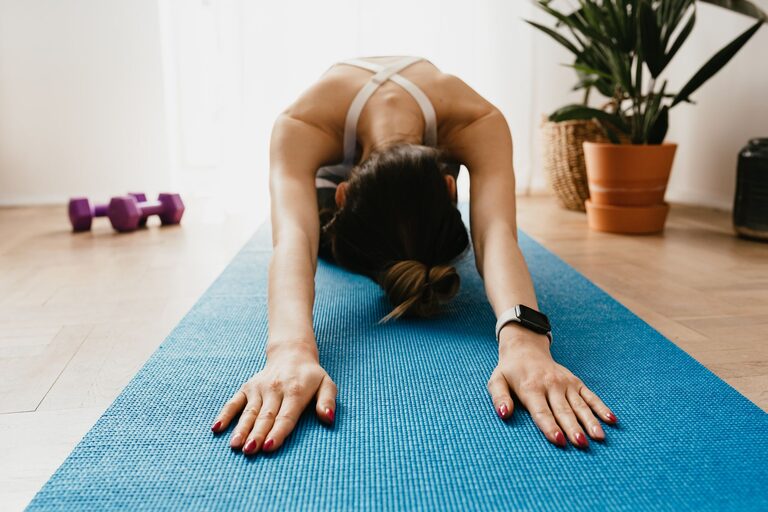
8. Child’s Pose
– Kneel on the floor, big toes touching, knees apart.
– Sit your hips back toward your heels.
– Reach your arms out in front and rest your forehead on the floor.
– Hold for 30 seconds to 1 minute.
Tips for Safe Stretching
– Warm up first: Stretching cold muscles can cause injury. A light walk or gentle movement for 3–5 minutes warms your muscles.
– Go slow: Move into each stretch gradually and avoid bouncing.
– Listen to your body: Stretching should feel like a gentle pull, not pain.
– Breathe deeply: Relax your body and breathe evenly while holding stretches.
– Be consistent: Aim to stretch daily or at least 3–4 times a week for best results.
When to Stretch
Stretching can fit into your day in many ways. Consider stretching:
– First thing in the morning to wake up your body.
– Before and after exercise to prepare and recover muscles.
– During breaks if you have a desk job to reduce tension.
– Before bedtime to relax and improve sleep quality.
Additional Resources
If you want to expand your stretching practice, many online videos and apps offer guided sessions suitable for beginners. Yoga and Pilates classes also include great stretching techniques.
Final Thoughts
Stretching at home is an easy habit that anyone can build. By dedicating just a few minutes each day, you’ll feel looser, more energized, and less stressed. Remember to be gentle with your body and enjoy the process of becoming more flexible and comfortable in your own skin.
Start today and see how stretching can enhance your daily life!
